Client
Zurich Community Trust
 Book a discovery call
Zurich Community Trust
How Zurich Community Trust combined leadership development, team co-creation and practical ways of working to navigate its next phase
When a leader returns to a team during a period of change, reconnecting people around the next phase is only part of the challenge.
The team also needs clarity about how it will communicate, prioritise, make decisions and follow through when the work becomes pressured or ambiguous.
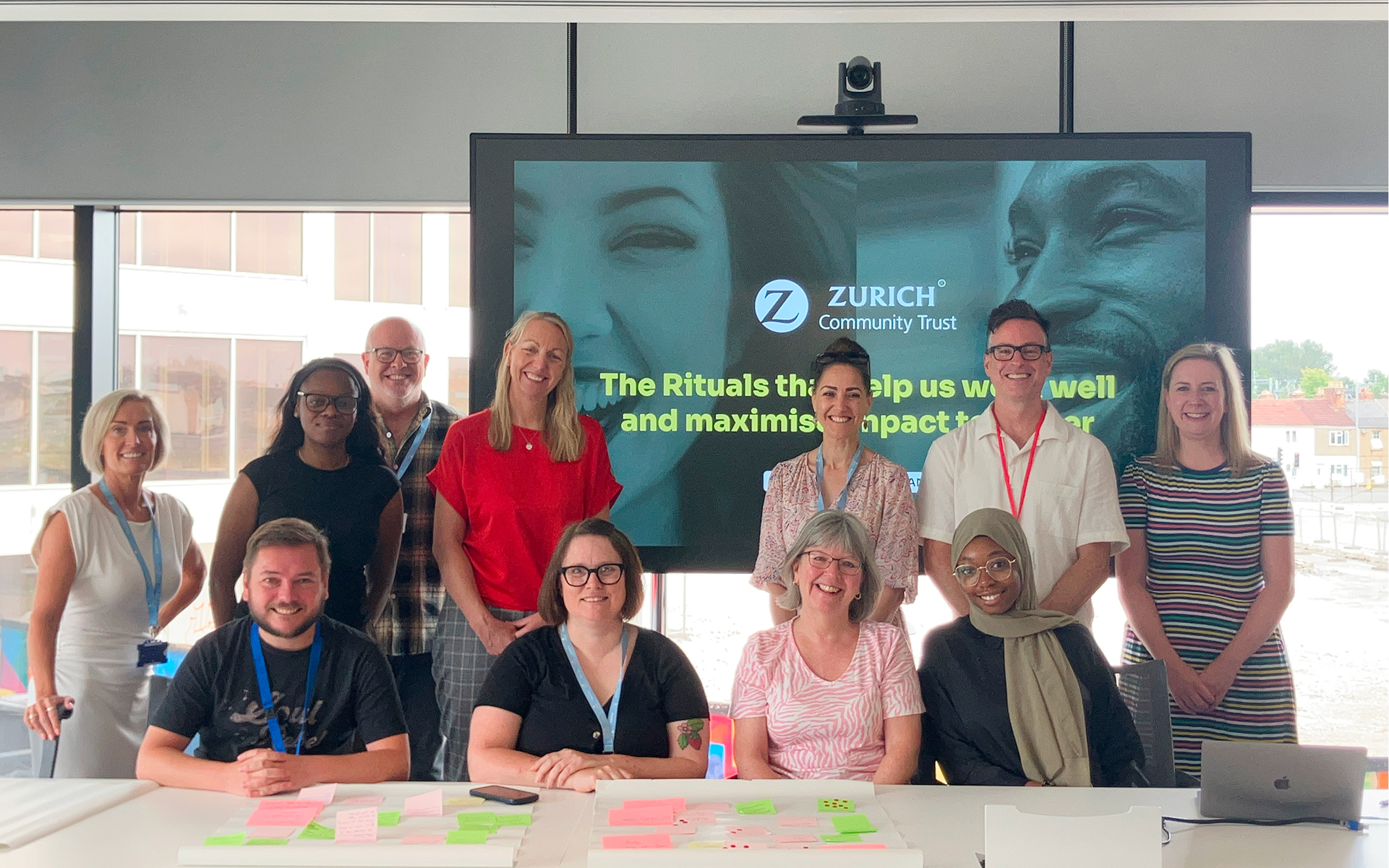
Rituals for Performance worked with Laurie Deans and the Zurich Community Trust team at two connected levels: developing Laurie’s personal leadership operating system while helping the wider team co-create practical ways of working.
The aim was not to deliver change to the team.
It was to build the change with them, then embed it into everyday work.
Case study
Client
Zurich Community Trust
Engagement lead
Laurie Deans, Head of Zurich Community Trust
Challenge
Leading a team through leadership transition, change and renewed growth ambitions
Approach
Leadership coaching, team discovery, an off-site workshop and a six-week ritual sprint
Output
Personal and team Ritual Operating Systems™
Focus
Communication, prioritisation, meetings, feedback, ownership and follow-through
Leadership transition
Laurie Deans was returning from maternity leave and reassuming leadership of Zurich Community Trust after a period of significant change.
The organisation was entering a new phase with a renewed vision and ambitions for growth.
This created an opportunity to reconnect the leader and team, clarify what mattered most and establish how they would work together through the next stage.
The team cared deeply about its work. The challenge was creating a more consistent operating environment that supported:
These become particularly important during leadership transition. Even committed teams can experience information gaps, competing priorities, uncertainty and uneven follow-through when the environment around them is changing.
The work therefore needed to connect Laurie’s development as a leader with the everyday systems used by the team.
Core principle
Many change programmes begin with leaders designing the solution and then communicating it to everyone else.
That can explain the change, but it does not necessarily create ownership.
Our starting principle was different:
Change should not be delivered to a team. It should be built with them.
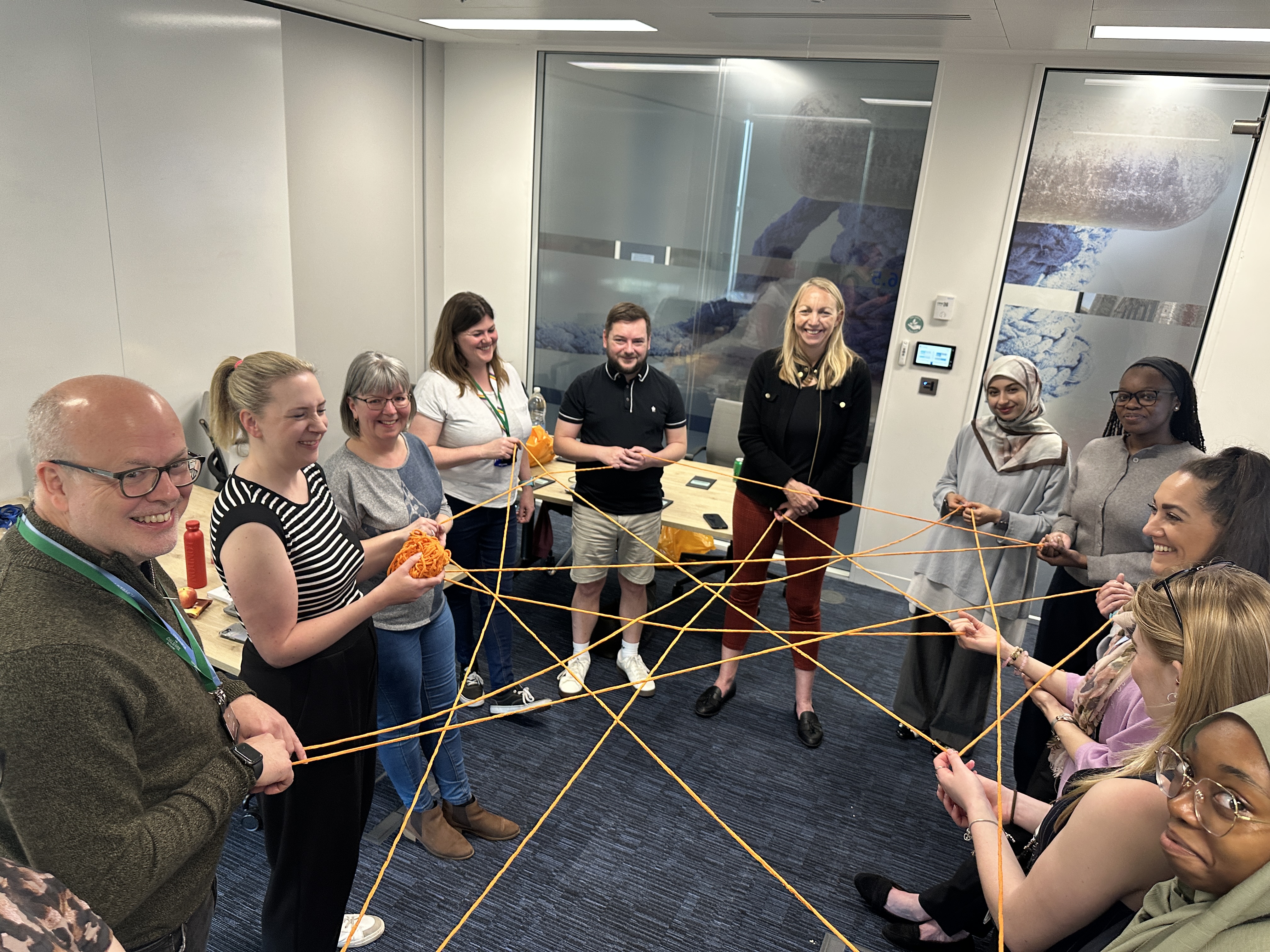
The Zurich Community Trust team was involved in defining the challenges, identifying the opportunities and shaping the practical tools it would use.
This made the team part of the solution rather than the recipient of someone else’s answer.
It also meant that the final operating system could feel like “how we work”, rather than a consultant’s framework added on top of the real work.
Two connected strands
We worked with Laurie and the wider team in parallel: developing Laurie’s personal leadership operating system while the team co-created practical ways of working. The principle was simple: leadership behaviour and the team environment need to reinforce each other, so change is built with people and embedded into everyday work rather than imposed from the top.
Co-creation
The off-site created the space to explore four positive opportunity areas:
The team helped define what was getting in the way, generate possible solutions and create early versions of the practices it wanted to test.
The work included discussion, reflection, practical exercises and co-creation.
It was not simply a training day.
The team was building the foundations of its own operating system.
Iteration
Change is rarely a clean, linear journey.
There is often a messy middle where ideas are tested, feedback creates new questions and parts of the system need to be changed.
That is not evidence that the work is failing. It is part of building something people can actually use.
The Zurich Community Trust team moved through this iterative process by:
The final system was built from the team’s feedback rather than protected from it.
This flexibility helped move the work from a workshop concept into something grounded in the team’s everyday experience.
Implementation sprint
Following the off-site, the team entered a six-week ritual sprint.
This gave people the opportunity to use new practices in real meetings, conversations and decisions.
The team could see what helped, where greater clarity was needed and what needed to be refined.
The rituals focused on real operating challenges rather than abstract leadership theory.
Embedded system
The learning from the coaching, discovery, off-site and ritual sprint was brought together into a simple one-page Team Operating System.
The system created a shared view of why the team exists, what matters most, how success is measured, how people work together, where to go for clarity, how to raise feedback, how decisions are made, where support can be found and how actions are followed through.
The objective was not to create another static document.
It was to give the team one practical place to go when it needed support, clarity, a decision or a way forward.
The operating system included:
Each part was designed to live inside existing meetings, workflows and routines.
Reported change
The strongest evidence from the programme is behavioural and qualitative.
The programme created positive energy while giving people a practical route for participating in change.
It also strengthened the connection between what the team wanted to achieve and how it worked together every day.
These are client-reported and observed changes. We are not claiming quantified financial or productivity outcomes from this engagement.
Client reflection
“I highly recommend the Rituals for Performance approach to team performance. Our workshop was very interactive, thought-provoking, and we achieved so much during our time together.”
Laurie Deans
Head of Zurich Community Trust
Laurie also highlighted the value team members found in the training and practical ritual assets.
The distinction was not simply the quality of the session. It was the depth and flexibility of the support, combined with tools that could remain embedded in how the team worked.
Connected development
Our Ritual Leadership Coaching works especially well alongside a Team Performance Programme or a Team Operating System. It connects the leader’s development with the way the team works day to day, so individual growth and the team environment reinforce each other.
What this demonstrates
People are more likely to understand, own and use working practices they have helped to shape.
A leader cannot ask others to work differently without examining their own habits, priorities and behaviours.
Feedback, experimentation and iteration help turn an attractive idea into a usable system.
Tools create greater value when they are embedded into meetings, decisions, feedback and everyday workflows.
A renewed vision only becomes meaningful when people know how to prioritise, communicate, contribute and follow through.
Simple, repeatable practices can give people clearer routes to decisions, support, feedback and action.
Designed to embed
This approach is designed for organisations that want change to become part of how work happens.
It combines:
It is unlikely to be the right approach for organisations that want change dictated from the top, a one-off inspirational session or a static framework that will not be tested in everyday work.
The goal is a living operating system that continues to evolve with the leader and team.
Discovery call
If you are returning to lead a team, stepping into a broader mandate or guiding people through organisational change, the next announcement or strategy presentation may not be enough.
A 30-minute discovery call can help us explore: